
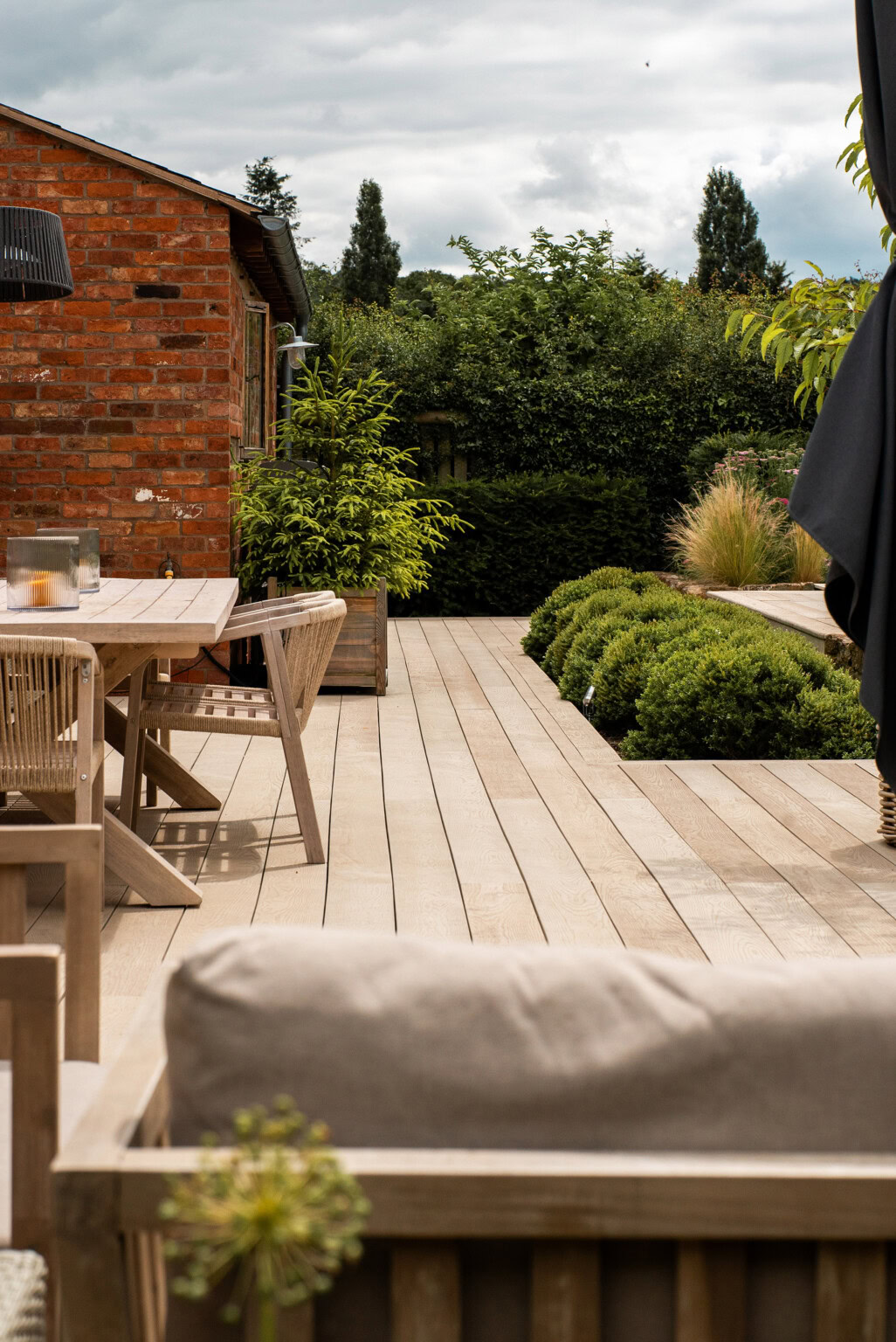
Wood Free Decking Benefits That Last

A deck should reward use, not demand constant repair. If you are weighing up wood free decking benefits, the real question is not simply how it looks on day one. It is how convincingly it holds its appearance, safety and structural integrity through wet winters, bright summers, and years of everyday life outdoors.
For many homeowners and specifiers, that is where the appeal becomes clear. Traditional timber can be beautiful, but it can often bring a cycle of staining, sealing, splintering and weather-related movement that gradually shifts the relationship from enjoyment to upkeep. Wood-free decking is designed to change that balance.
Why wood free decking benefits matter over time
The strongest case for wood-free decking is not a single feature. It is the combination of design authenticity and engineered performance. Premium boards like Millboard decking boards are often developed to capture the texture and character associated with natural timber while avoiding many of the familiar weaknesses that can be associated with timber
That difference can matter more with each passing season. A deck sits fully exposed to rain, frost, UV, muddy shoes, furniture movement and regular footfall. In busy family gardens, on roof terraces and across commercial spaces, material choice can have a direct impact on maintenance schedules, lifespan and day-to-day confidence underfoot.
Wood-free decking earns its place when a project needs to look refined without becoming labour-intensive. It suits clients who want a finished outdoor space, not an ongoing restoration project.
Low maintenance is one of the clearest wood free decking benefits
One of the most immediate advantages is the reduction in routine upkeep. Timber decking can often need repeated treatment to preserve colour and help guard against moisture ingress. Even with good care, boards can fade unevenly, become rough and demand periodic sanding or replacement.
Wood-free decking removes much of that burden. There is no regular staining schedule to plan around and no annual sealing cycle required simply to maintain basic performance. Cleaning is straightforward, which makes a meaningful difference for homeowners who want to spend time using the garden rather than maintaining it.
For commercial settings, the value can be equally practical. Lower maintenance can mean fewer interruptions, more predictable facilities management and a cleaner long-term cost profile. The initial investment may be higher than some basic materials, but reduced upkeep and repair often changes the calculation when viewed over the full life of the installation.
Better resistance to weather, moisture and movement
Outdoor surfaces in Great Britain need to cope with a particularly demanding mix of conditions. Extended rainfall, cold snaps, shade, leaf fall and occasional heatwaves all test the stability of a deck. Timber reacts naturally to moisture and temperature variation, which can lead to swelling, shrinking, warping or splitting.
Wood-free decking is engineered to offer far greater consistency in these conditions. That stability helps preserve a cleaner visual finish and a more reliable surface over time. It also reduces the likelihood of the deck feeling tired or uneven after repeated weather cycles.
This does not mean every product behaves identically. Specification, installation method, subframe design and site conditions still matter. But as a category, wood-free decking is chosen precisely because it is better suited to long-term exposure than conventional timber boards that can be more vulnerable to rot and distortion.
A safer surface underfoot
Safety tends to move up the priority list once a deck is in daily use. Wet leaves, early morning frost, rainwater and foot traffic all affect how secure a surface feels. For families, hospitality venues and public-facing developments, slip resistance is not a detail. It is a core performance requirement.
A key wood free decking benefit is the ability to combine a refined appearance with enhanced underfoot confidence. High-quality systems are developed and tested with grip in mind, helping the surface remain usable in the conditions British gardens and commercial exteriors routinely face.
There is also the issue of splinters. Timber can become rough as it weathers, especially in high-traffic zones or where maintenance has been delayed. Wood-free boards avoid that familiar drawback, which is particularly valuable around children and pets.
Authentic aesthetics without the compromise
The assumption that high performance must look artificial is outdated. Premium wood-free decking can deliver a level of realism that satisfies even design-led projects, especially where boards are produced from moulds taken from real timber masters, like Millboard decking.
That matters because the visual role of decking has changed. It is no longer just a practical platform at the back of the house. It frames outdoor kitchens, links extensions to gardens, defines rooftop entertaining areas and shapes the first impression of hospitality and leisure spaces. Surface quality, tonal depth and detailing all influence whether the finished scheme feels elevated or merely functional.
For architects and discerning homeowners, the appeal lies in achieving timber character with fewer material drawbacks. Grain detail, colour variation and board format can all contribute to a more considered result, while the stability of the product helps retain that appearance for longer.
Long-term value goes beyond purchase price
A premium outdoor material should be judged over years, not weekends. This is where discussions around value become more useful. Wood-free decking is rarely selected because it is the cheapest route to completion. It is selected because it can deliver stronger lifetime performance.
When you factor in the cost of treatments, labour, board replacement and the visual decline that can push an early refurbishment, lower-maintenance materials often present a more compelling long-term proposition. The same principle applies to commercial projects, where lifecycle thinking is central to specification.
There is also a less visible aspect of value: confidence. Confidence that the deck will still support the design intent after repeated seasons. Confidence that maintenance requirements will not escalate unexpectedly. Confidence that the surface will remain inviting rather than becoming a liability.
Design flexibility for contemporary outdoor living
One of the more understated wood free decking benefits is design freedom. Because the category is now well developed, specifiers and homeowners are no longer limited to a narrow visual language. Contemporary widths, varied colourways, curved layouts, fascia detailing and coordinated accessories make it easier to produce a cohesive exterior scheme.
That flexibility is particularly useful in projects where decking must work alongside cladding, glazing, masonry or landscaping features. A deck should feel integrated into the architecture, not added as an afterthought. Well-designed systems support cleaner edges, smarter transitions and a more resolved finish.
For larger schemes, technical support also becomes part of the design value. Access to subframe solutions, trims, installation guidance and specification resources can simplify delivery and reduce avoidable issues on site. That matters just as much as the board itself.
Sustainable and durable material choices
For many buyers, performance is only part of the decision. They also want to understand what the material is made from and how it fits into broader sustainability goals. Wood-free decking can support that conversation well, particularly where products incorporate recycled content and are manufactured with durability in mind.
A longer-lasting deck can be a more durable choice than one that requires frequent replacement. Reduced demand for paints, stains and preservatives over the years also contributes to a lower-maintenance material story that feels more aligned with modern expectations.
As ever, it is worth looking at the full picture rather than relying on a single claim. Product composition, manufacturing standards and tested performance all deserve scrutiny. Premium brands such as Millboard have helped raise expectations here by combining design quality with technical credibility and UK manufacturing assurance.
Is wood free decking always the right choice?
Not every project has the same priorities. Some clients are deeply attached to the ageing character of natural timber and are happy to accept the maintenance that comes with it. On a tight budget, upfront cost may outweigh lifecycle considerations.
But where the brief centres on lasting appearance, simplified upkeep, comfort underfoot and dependable outdoor performance, wood-free decking is an increasingly persuasive solution. It answers the practical frustrations many people have already experienced with traditional boards, while meeting the higher design expectations now placed on exterior spaces.
The most successful projects tend to start with an honest brief. If you want a deck that keeps asking for attention, timber remains an option. If you want one that keeps giving the space a composed, premium finish with far less intervention, wood-free decking is built for exactly that role.
The best outdoor materials do not just survive the weather. They keep the space ready for enjoying, season after season.