
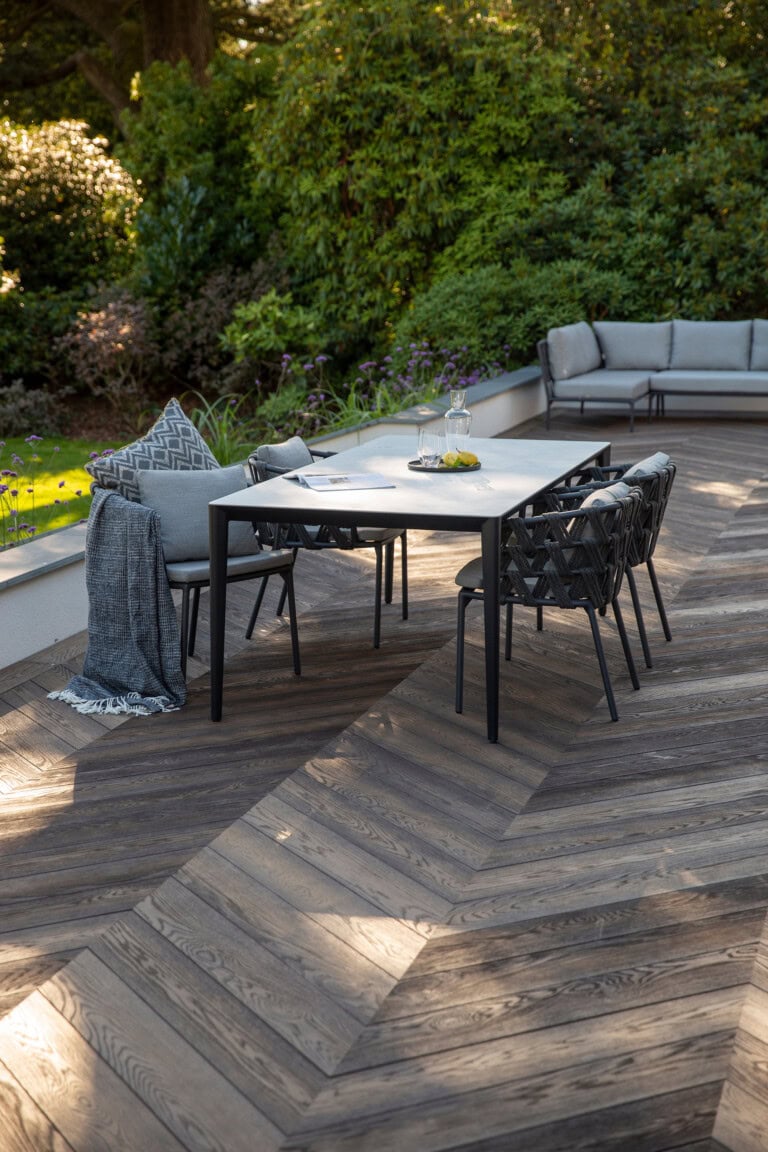
What Is Millboard Decking?
Summary
Millboard decking is a premium composite decking solution designed and manufactured in Britain. It is created using advanced resin mineral composite technology and hand moulded from real oak boards to deliver the authentic look of natural timber without the drawbacks of traditional wood. Unlike conventional decking materials, Millboard decking is wood free, highly durable, low maintenance, and engineered to perform in demanding outdoor environments.
Contents
- Introduction to Millboard Decking
- What Is Millboard Decking Made From
- How Millboard Decking Is Manufactured
- Millboard Decking Collections Explained
- How Millboard Decking Outperforms Timber
- Slip Resistance and Safety Performance
- Design Flexibility and Aesthetic Detail
- Sustainability and Responsible Design
- Installation and Ongoing Maintenance
- Why Choose Millboard Decking
1. Introduction to Millboard Decking
Millboard decking is designed for people who want the beauty of natural wood decking without the maintenance, instability, and long term issues associated with timber. Developed through years of material innovation and craftsmanship, Millboard has become a benchmark for high performance composite decking.
Every Millboard deck board is designed to enhance outdoor living spaces while delivering long lasting performance, making it a trusted choice for residential gardens, commercial landscapes, hospitality venues, and coastal or high traffic environments.
2. What Is Millboard Decking Made From?
Millboard decking is manufactured using a proprietary Resin Mineral Composite, known as RMC. This material is completely wood free and engineered specifically for external use.
Each board consists of:
- A mineral based composite core reinforced with fibres for strength and stability
- A flexible elastomer surface layer designed to resist impact, stains, and wear
- Integrated UV stabilisers to improve colour retention over time
Around 38 percent of the material content comes from recycled sources, including reclaimed limestone diverted from landfill. The absence of wood fibres means Millboard decking will not rot, swell, split, or attract insects.
3. How Millboard Decking Is Manufactured
Millboard decking begins with real oak boards, selected for their character and grain. These boards are used as masters to create detailed moulds that capture the fine texture, knots, and natural imperfections found in timber.
Each deck board is hand moulded and then individually hand coloured using layered pigments. This process creates tonal variation and depth, ensuring no two boards look identical. The result is a deck surface that closely replicates real wood, rather than the repetitive appearance often seen with standard composite decking.
This blend of traditional craftsmanship and modern material science is central to Millboard’s identity.
4. Millboard Decking Collections Explained
Millboard decking is available in several distinct collections, each offering a different aesthetic while sharing the same core performance benefits.
Enhanced Grain
Enhanced Grain boards replicate the look of freshly cut timber with pronounced grain detail and rich colour variation. They are available in multiple widths and natural wood inspired tones.
Weathered Oak
Weathered Oak offers a softer, aged appearance, ideal for traditional settings or designs that require a more relaxed, heritage aesthetic.
Lasta Grip
Lasta Grip boards feature raised strips along the surface to enhance slip resistance. They are designed for areas where safety is critical, such as steps, ramps, balconies, and pool surrounds.
Modello
Modello is a design led decking range that introduces geometric patterns using linear or curved boards. It allows architects and designers to create statement surfaces while retaining all the performance benefits of Millboard decking.
5. How Millboard Decking Outperforms Timber
Millboard decking addresses many of the common problems associated with traditional wood decking.
Durability
Timber decking is prone to splitting, rotting, and warping over time. Millboard decking is wood free and non porous, making it resistant to moisture damage and decay.
Low Maintenance
Wood decking requires regular sanding, staining, or oiling. Millboard decking does not require surface treatments and only needs occasional cleaning.
Dimensional Stability
Millboard boards maintain their shape and alignment, reducing movement and maintaining consistent gaps throughout the life of the deck.
Long Lifespan
Designed to last significantly longer than traditional timber, Millboard decking offers strong long term value despite its premium positioning.
6. Slip Resistance and Safety Performance
Safety is a key performance feature of Millboard decking. The flexible elastomer surface provides excellent slip resistance, even in wet conditions.
Millboard decking has a lower slip potential than timber, particularly as wood becomes smooth or algae covered over time. This makes it especially suitable for high traffic areas and locations exposed to moisture.
Lasta Grip boards further enhance this performance where additional reassurance is required.
7. Design Flexibility and Aesthetic Detail
Millboard decking is designed to work across a wide range of architectural styles. The realistic grain texture, varied board widths, and extensive colour palette allow designers to create outdoor spaces that feel cohesive and intentional.
Accessories such as bullnose boards, flexible edging, fascia boards, and colour matched fixings ensure a clean, professional finish with minimal visible fixings.
Hidden Durafix fixings sit beneath the surface layer, closing back over the screw head to maintain the natural appearance of the deck.
8. Sustainability and Responsible Design
Millboard decking is designed with sustainability in mind. By using recycled materials and eliminating the need for chemical treatments or frequent refinishing, Millboard reduces environmental impact across the product lifecycle.
The long lifespan of the boards also means fewer replacements and less waste over time. Manufactured in Britain, Millboard maintains strict quality control while supporting responsible production practices.
9. Installation and Ongoing Maintenance
Millboard decking can be cut and installed using standard woodworking tools. It is compatible with Millboard subframe systems and accessories designed to ensure correct spacing, drainage, and ventilation.
Once installed, maintenance is minimal. Regular sweeping and occasional washing with mild detergent are usually sufficient to keep the deck looking its best.
There is no need for sealing, staining, or repainting, saving time and cost over the life of the deck.
10. Why Choose Millboard Decking?
Millboard decking offers the rare combination of authentic timber appearance and advanced composite performance. It is engineered to withstand the realities of outdoor living while maintaining its aesthetic appeal year after year.
For homeowners, designers, and specifiers looking for a premium decking solution that delivers durability, safety, and visual excellence, Millboard decking represents a confident and future proof choice.